Empowered Youth, Stronger Nation: Realising the Promise of Viksit Bharat @ 2047
India stands at a defining demographic moment. With nearly 65% of its population below the age of 35, the country's greatest resource is not merely its economic potential but the aspirations, creativity, and energy of its youth. Yet, this promise is accompanied by a difficult paradox. Even as India has emerged as one of the world's fastest-growing major economies, concerns over employment quality, declining labour force participation among young people, and the widening gap between education and employability have become increasingly pronounced. The challenge before policymakers is no longer simply to educate or employ the youth, but to empower them as equal partners in nation-building.

The proposed National Youth Policy (NYP) 2025 reflects an important shift in this direction. Unlike the National Youth Policy of 2014, which primarily focused on welfare and participation, the new framework envisions young Indians as architects of a developed India by 2047. It seeks to prepare them for a rapidly changing world shaped by artificial intelligence, digital technologies, climate transitions, and new forms of work. Such a reorientation is timely. A youthful population becomes a demographic dividend only when supported by quality education, meaningful employment, social security, and opportunities for innovation.
Over the past decade, India has undertaken significant structural reforms in education and skill development. The National Education Policy (NEP) 2020 has attempted to break rigid academic silos by introducing multidisciplinary learning, flexible entry-exit options, and multiple pathways to higher education, while aspiring to raise the Gross Enrolment Ratio to 50% by 2035. Simultaneously, India's skilling ecosystem has moved beyond conventional vocational training towards sectors that are expected to define the economy of the future artificial intelligence, semiconductors, electronics manufacturing, green energy, drones, and advanced manufacturing.
An equally noteworthy transformation has been the decentralisation of workforce planning. Through District Skill Committees across hundreds of districts, skill development is increasingly being aligned with local economic realities instead of a one-size-fits-all national approach.
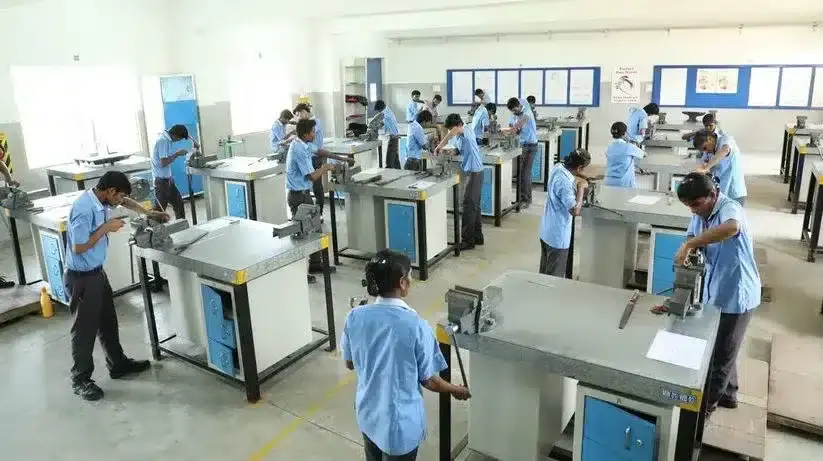
Such localisation recognises that India's labour markets are diverse and that employment opportunities differ significantly across regions. Likewise, the internationalisation of Indian higher education through overseas campuses and dual-degree collaborations has strengthened India's academic footprint and exposed students to global standards of learning and research.
However, institutional reforms alone cannot bridge the disconnect between education and employment. Employers consistently point to deficiencies in communication, problem-solving, teamwork, and workplace adaptability among graduates. Degrees continue to outpace employability. The challenge is therefore not merely one of skill acquisition but of nurturing confidence, creativity, and critical thinking qualities that remain difficult to cultivate through classroom instruction alone.
The changing nature of work presents another policy dilemma. Millions of young Indians now earn livelihoods through digital platforms, freelancing, and gig-based employment. While these sectors have created unprecedented opportunities for income generation and flexibility, they have also exposed workers to insecure contracts, limited social protection, and uncertain earnings. Ensuring legal safeguards, fair remuneration, health coverage, and social security for gig workers is no longer a welfare concern but an economic necessity in an increasingly platform-driven economy.

Entrepreneurship, too, requires deeper institutional support. India's startup ecosystem has matured remarkably over the past decade, but early-stage enterprises, particularly in smaller towns, continue to face procedural hurdles, delayed municipal approvals, and uneven access to finance. If innovation is to become geographically inclusive, policy must move beyond celebrating unicorns towards nurturing thousands of sustainable local enterprises capable of generating employment within their communities.
Equally deserving of attention are former members of the armed forces who often encounter difficulties while transitioning into civilian careers. Better coordination among ministries, public sector institutions, Indian Railways, and State governments can facilitate their rehabilitation by recognising their discipline, leadership, and technical expertise as valuable national assets.
The next phase of youth policy must therefore focus on building resilience alongside opportunity. Expanding Artificial Intelligence education through initiatives such as Skilling for Artificial Intelligence Readiness (SOAR), particularly in rural schools, can ensure that digital literacy does not remain an urban privilege. Strengthening the Startup India Seed Fund Scheme for entrepreneurs in Tier-II and Tier-III cities can democratise innovation.

Programmes such as the proposed Viksit Bharat Rozgar Yojana can encourage formal employment for first-time workers, while the expansion of the Ayushman Bharat Digital Mission can provide portable digital health records for migrant workers whose mobility often leaves them outside conventional welfare systems.
Ultimately, India's demographic advantage is neither permanent nor automatic. History offers many examples of countries that failed to convert youthful populations into engines of sustained development. India's success will depend less on the size of its youth population than on the quality of opportunities it creates for them. A nation that invests in education without employability, skills without dignity of work, or entrepreneurship without institutional support risks squandering its greatest strength.


Comments