Teenage Mental Health in India: Why Listening to Teens Matters

When we talk about teenage mental health in India, the conversation usually happens around young people rather than with them. Adults discuss school pressure, social media, anxiety, loneliness and academic stress. Schools introduce counselling programmes, parents offer advice and policymakers design support systems. But somewhere in all of this, there is one voice that can easily get lost: the teenager actually experiencing it.
A recent Brookings article on adolescent mental health in India argues that this needs to change. Instead of simply creating more programmes for young people, mental-health systems should give adolescents a meaningful role in explaining what they are going through and what kind of support they actually want. The article points out that many young people continue to keep their struggles to themselves, while some turn to AI instead of talking to parents, friends or professionals.
That silence can be easy to misunderstand. A teenager who does not ask for help may not necessarily be fine. They might not know how to explain what they are feeling, worry about being judged, or simply believe that nobody will understand. For some, saying “I’m not okay” can feel much harder than pretending everything is normal.
Why Indian Teenagers May Not Speak Up About Mental Health
This is where listening becomes important.

Mental health support is often built around the idea of intervention: identify the problem, find the person who needs help and connect them to a service. But before any of that can happen, young people need to feel safe enough to speak. If a student thinks that talking about anxiety will immediately lead to criticism about their studies, or that admitting loneliness will be dismissed as overthinking, they may choose silence instead.
The Brookings article also highlights how adolescent mental health is shaped by factors beyond the individual. Gender, family relationships, school environments, social connections and access to trained professionals can all influence how young people experience and respond to mental-health concerns.
Why Listening Should Come Before Mental-Health Intervention
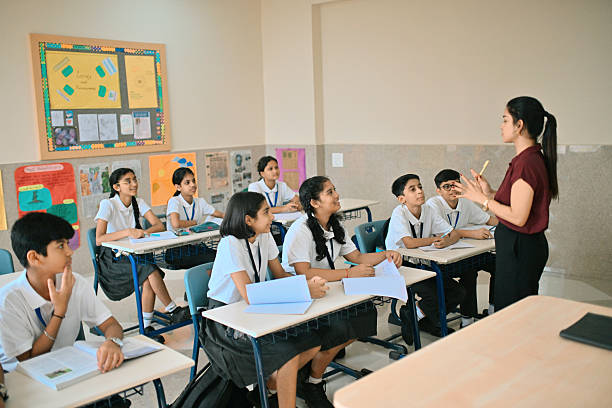
Schools could therefore play a much bigger role than simply providing a counselling room. They are one of the places where young people spend most of their time, making them important spaces for building belonging, encouraging healthy relationships and helping students recognise when they need support.
But creating a mental-health programme and making students actually use it are two different things.
A counselling service can exist on paper while students remain hesitant to enter the room. A wellbeing workshop can be organised while students still feel uncomfortable talking honestly. And a mental-health awareness campaign can spread information without necessarily making someone feel understood.
There is also a larger question of agency. Young people are often treated as recipients of mental-health services rather than participants in designing them. Yet the problems adults are trying to solve are being experienced by young people themselves.
Giving Young People a Voice in Mental-Health Policy
What if students were asked what makes them uncomfortable about counselling? What if they could explain what kind of support feels useful and what feels patronising? What if schools regularly listened to students before deciding what their wellbeing programmes should look like?
These questions matter because there is no single teenage experience. The pressure faced by a student preparing for competitive exams may look different from the loneliness of someone who has just moved away from home. A teenager dealing with family expectations may need something different from someone struggling with friendships or body image. Even within the same school, students can experience the same environment very differently.
India already has policies and programmes that recognise adolescent mental health, but the challenge is turning those commitments into support that young people can actually access and trust. The Brookings article points to gaps including shortages of trained mental-health professionals, stigma and limited youth participation in the way systems are designed.

What Better Mental-Health Support for Indian Teenagers Could Look Like
Maybe the next step, then, is not always another awareness campaign.
Maybe it is a conversation.
Not a lecture about how teenagers should manage stress. Not another reminder to “seek help.” Just a genuine question: What is actually happening, and what would make you feel supported?
Because mental-health support cannot really be youth-centred if young people are missing from the conversation. And sometimes, before asking teenagers to speak up, adults may need to become better at listening.


Comments