When Music Becomes Medicine: Rishab Rikhiram Sharma Takes Sitar for Mental Health Global
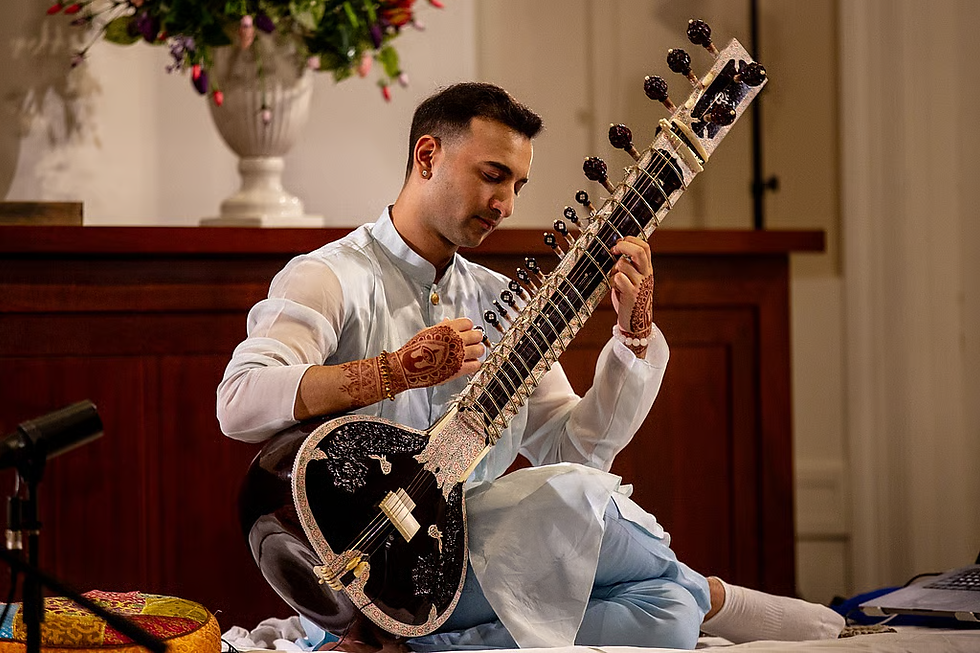
Indian sitarist and mental-health advocate Rishab Rikhiram Sharma is taking his Sitar for Mental Health initiative to major international stages, including Royal Albert Hall in London and Carnegie Hall in New York. The project combines Indian classical music, contemporary soundscapes and mindfulness to open conversations around emotional well-being.
Sitar for Mental Health Takes Music to Global Stages
What if a concert could be more than entertainment?
For Indian sitarist Rishab Rikhiram Sharma, music has become a way of creating space for conversations around mental health.
His initiative, Sitar for Mental Health, uses Indian classical music and sound meditation to encourage relaxation, mindfulness and emotional reflection. Founded in 2020, the project has also offered free online music-therapy sessions and collaborated with mental-health experts.

The initiative has now moved onto some of the world's most recognisable stages. Sharma is taking Sitar for Mental Health to venues including Royal Albert Hall and Carnegie Hall, bringing an Indian classical tradition into a contemporary conversation about mental well-being.
The idea is particularly interesting because music has long been associated with emotional expression. A familiar song can bring back a memory, change someone's mood or provide a sense of connection without requiring words.
Sharma's approach builds on that emotional relationship while introducing younger audiences to the sitar through modern production and immersive performances.
His connection with Indian classical music is also deeply rooted. Sharma belongs to the Rikhi Ram family of instrument makers and was a disciple of the legendary Pandit Ravi Shankar. His work combines that classical foundation with contemporary sounds and technology.
From Global Stages to a 10-City India Tour

Earlier in 2026, the initiative also returned to India through a 10-city Sitar for Mental Health tour, travelling across Bengaluru, Mumbai, Pune, Hyderabad, Jaipur, Chennai, Ahmedabad, Chandigarh, Kolkata and New Delhi.
Can Music Support Mental Well-Being?
The project also demonstrates how traditional Indian art forms can be repurposed for modern audiences without completely abandoning their roots.

But it is important to distinguish between music supporting well-being and music replacing professional mental-health treatment. Sharma's project is positioned around wellness, mindfulness and awareness; it should not be understood as a substitute for evidence-based psychological or psychiatric care.
Still, its growing audience points towards something worth examining: young people are increasingly looking for ways to manage stress and reconnect with themselves that don't necessarily feel clinical.
Perhaps the future of wellness doesn't always look like a therapy room.
Sometimes, it sounds like a sitar.


Comments