Klay Thompson Miami Heat: Chasing Another NBA Championship
The quiet, strange ending of Klay Thompson's time in Golden State and what comes next.
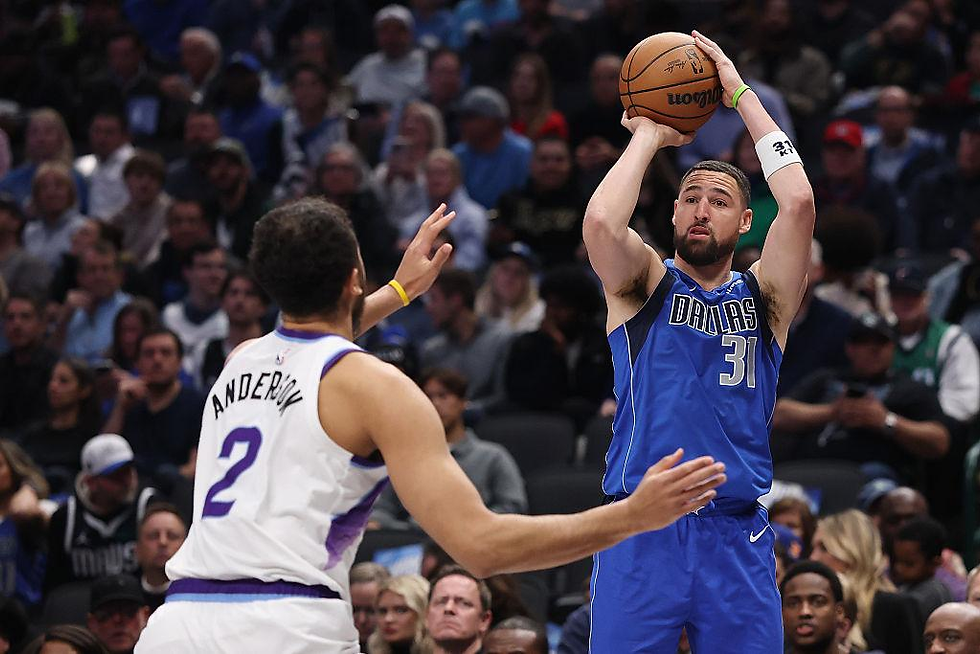
Klay Thompson said it more than once, in more than one season: "I would love to be a Warrior for life." Golden State drafted him 11th overall in 2011, built a dynasty around him and Stephen Curry, and has already said it will retire his number. And yet this week, at 36, Thompson is signing a two-year deal with the Miami Heat, after Dallas bought out the rest of his contract. It's his third team in three years. Somewhere between wanting to stay forever and packing for a third city, something changed. To understand what, start with what he actually was.
The Klay Thompson Who Became a Warriors Legend

Thompson isn't a Hall of Fame case just because he could shoot. He's a case because of what that shooting did for thirteen years in Golden State: four championships between 2015 and 2022, five All-Star selections, two All-NBA Third Team nods, an All-Defensive Second Team selection in 2019 back when he was still guarding the other team's best scorer every night, and gold medals with Team USA at the 2014 FIBA World Cup and the 2016 Rio Olympics.
None of that happens without Curry next to him, and Thompson never pretended otherwise. But the "Splash Brothers" worked because he didn't need the ball to hurt you; he read a screen, caught it in rhythm, and let go. By the time he left Golden State, he'd made more three-pointers than all but a handful of players in NBA history, at a career clip north of 40 percent, without ever needing to dominate a possession to get there.
That version of Thompson, efficient, rarely needing the ball had one gear most shooters never find: elimination games. No single night shows it better than May 28, 2016, in Oklahoma City, Game 6 of the Western Conference Finals. Golden State had fallen behind 3-1 in the series before clawing back to force this moment; one more loss and the season was over. Thompson answered with 41 points, going 11-of-18 from three to set a new NBA playoff record, and personally outscored the entire Thunder team in the fourth quarter, 19 to 18, as Golden State stole the win on the road. Two nights later, the Warriors closed out Game 7 and reached the Finals.
That's where "Game 6 Klay" comes from, not one great night, but the idea that the bigger the moment, the calmer he got. It happened again in 2018 against Houston, when 35 points helped finish off another conference finals. Which makes it harder to explain what happened three years after Oklahoma City, in a different Game 6. June 13, 2019, NBA Finals against Toronto: Thompson rose for a dunk, got fouled in the air, and came down wrong. Torn ACL. The same stage that made him a legend took his knee out from under him.
Two Injuries Changed Klay Thompson's Career
He missed the next two seasons entirely, rehabbing the knee in 2019-20, then, just as he neared a return, a torn Achilles during an offseason workout wiped out 2020-21 too. Almost two and a half years without an NBA game. Don't call it the end of his career, because it wasn't.
Thompson returned in January 2022 and helped Golden State win a fourth title that same season, one of the more improbable comebacks in recent NBA history. But it wasn't the same player.

The lateral quickness that let him fight through screens on defense never fully came back. Creating his own shot off the dribble, always a smaller part of his game, shrank further; he needed cleaner, more open looks to be effective. The shooting touch survived. Almost everything that required his legs to do something explosive and repeatable, night after night, did not.
That decline caught up with him by his final Golden State season, 2023-24, when Thompson was 34, averaging under 18 points for the first time in a decade, and occasionally benched down the stretch of close games. "It's hard for anybody," he admitted at the time. Coach Steve Kerr later said there were signs
Thompson might leave, even while insisting the team wanted otherwise: "I wanted Klay to be a Warrior for life." Owner Joe Lacob has since said Golden State's initial offer actually topped what Dallas eventually paid. Thompson didn't take it, and the two sides never got closer after that.
Why Klay Thompson Left Golden State for Dallas
This isn't a betrayal story. Once that season ended in a play-in loss, Thompson said plainly that he wanted to chase a fifth championship before he was done. Golden State, meanwhile, was reshaping its roster around a different timeline than an aging, defense-limited Thompson at his old price. Loving a franchise and knowing it's time to leave aren't opposites. Sometimes they're the same decision.
He picked Dallas in July 2024 because Dallas had just reached the Finals. Luka Dončić, Kyrie Irving, and a roster starving for shooting looked, on paper, like exactly the team to get an aging sharpshooter one more ring. He signed for three years and $50 million. Then, in one of the more jarring trades in recent memory, Dallas sent Dončić to the Lakers that January. The team Thompson signed up for stopped existing almost overnight.
Two seasons of rebuilding around Anthony Davis, Irving, and rookies followed, while Thompson's own numbers kept sliding to a career-worst 11.7 points a game this past season, on 38.3 percent shooting from three, across 69 games with only eight starts, as Dallas finished 26-56. Thompson made it known he wanted to chase a contender instead, and the two sides worked out a buyout of the roughly $17.5 million left on his deal rather than have him ride out a lost season in Dallas.
Why the Miami Heat Make Sense for Klay Thompson

That's how he lands in Miami, on a two-year deal worth close to $13 million. The Heat spent this summer landing Giannis Antetokounmpo in a blockbuster trade with Milwaukee, pairing him with Bam Adebayo up front which instantly created a need for shooting to keep the floor from getting crowded.
Thompson, mostly a bench piece now, is still dangerous when left open, which is the entire job description: space the floor, let Giannis and Adebayo work, guard less. It's not without risk his defense isn't 2019 defense anymore, and his misses have piled up in stretches these past two years. But a real contender, in a bench role, is close to exactly what he said he wanted when he first left Golden State. It just took a Dallas detour to get there.

All of that—the trades, the buyout, the bench role—will eventually be background noise to a bigger question. Assume his career ended today. Four championships. Five All-Star trips. An All-Defensive selection. Two international golds. The NBA record for three-pointers in a single game, 14, still standing.
One of the few players ever to make 100 three-pointers in the Finals alone. Charles Barkley has called him a future first-ballot Hall of Famer while also being blunt that "no player gets better with age." Both are true about the same man.
The counterargument isn't about talent. It's about how much of his prime the injuries erased, and whether two and a half lost seasons, followed by a real decline, should factor into a Hall of Fame vote the way they don't for guards who stayed healthy. Plenty of shooting guards with his exact résumé sail in easily. Fewer of them have a five-year stretch where the tape visibly shows two different players. It's a real argument, not a formality, which is exactly why it's worth having honestly.
He wanted to be a Warrior for life. Instead, he finds himself with his third team in three years, chasing one more ring that could become the final piece of his legacy.
Maybe he needs this one more championship, won somewhere else, to settle the story on his own terms. Or maybe it was already settled back in January 2022, when a guy who'd missed two and a half years walked back onto a court and helped win one anyway. Both can't be the real ending. Only one of them will be.


Comments