How Messi Keeps Adding Trophies When the World Thinks He's Finished
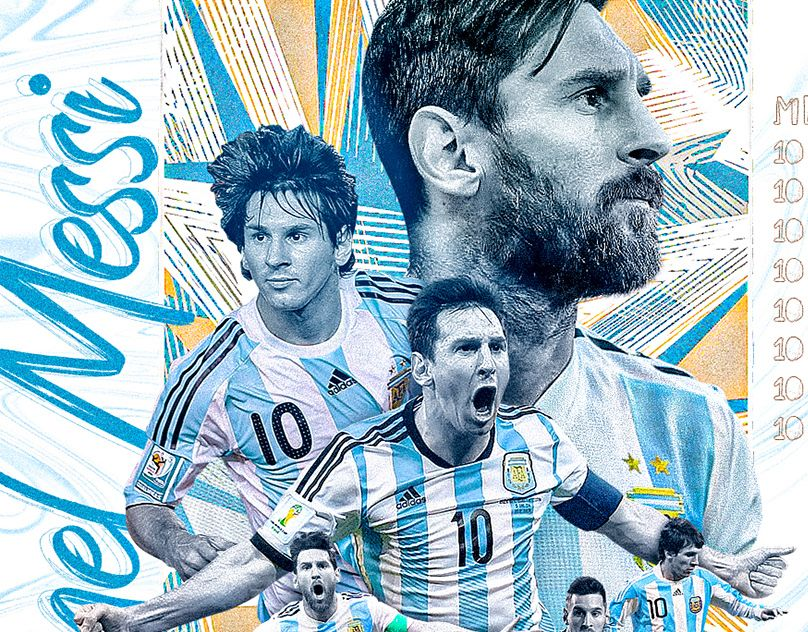
By MLS's count, Lionel Messi has reached 47 trophies—the most in men's football history. The real story isn't the number. It's why he's still adding to it.

Messi Is Closing In on 50 Trophies
Messi is now within striking distance of winning 50 trophies. Depending on whose count you trust, Messi needs two or three more before he reaches that number.
The numbers need some context. MLS currently counts Messi at 47 trophies across club and country, including three with Inter Miami: the 2023 Leagues Cup, the 2024 Supporters' Shield and the club's first MLS Cup in 2025. Different trophy-counting methods produce different totals because some lists exclude youth and Olympic competitions.
From Barcelona Habit to Argentina Heartbreak
Messi started playing professionally at 17, and his first major trophy came with Barcelona in the 2004–05 La Liga season. By his mid-20s, playing for a Barcelona side that seemed to win almost everything, trophies had become a habit. Four Champions League titles and ten La Liga championships followed.

Argentina was harder. Messi lost four major finals with his country—three Copa Américas and a World Cup—before winning anything at senior level. That drought shaped how people talked about him for the better part of a decade, arguably more than any trophy did. When Argentina won the 2021 Copa América and then the 2022 World Cup, it closed the one gap that had actually mattered to his legacy.

After the World Cup, Messi Changed What Winning Meant
So what does someone do after that? For Messi, the answer has mostly been: keep playing, somewhere smaller, for lower stakes. Two Ligue 1 titles at PSG. Then Inter Miami won a Leagues Cup, a Supporters' Shield, the club's first MLS Cup. None of those carry the weight of a Champions League or a World Cup. He didn't need any of them to prove anything.

At 39, the Question Is No Longer What Messi Has to Prove
Some of this is just what a 39-year-old body allows rather than what it wants. Messi's minutes are managed far more carefully than they were at 25: fewer full 90s, more rest between games, and more reliance on reading a play early rather than outrunning it. That's not unusual for players who last this long. It does mean the trophies still arriving are being won by a different version of the same player, one who's traded speed for timing.
Then there's this month. Messi's father Jorge, the man who drove him to training after work as a kid, and later became his longtime agent died on August 8, at 68. A few days later, Messi wrote publicly that he wasn't sure how much longer he'd keep playing at all. Messi returned to action for Inter Miami soon afterward and, on August 20, scored and assisted in a 2–2 draw with Philadelphia Union—his first goal since his father's death.

That, more than the count, is probably the real story. Fifty trophies won't change anything Messi has already proved with a World Cup and eight Ballon d'Ors. What's left to win was never really about proof. It's about whether he still wants to be out there and right now, without any tidy answer to that question, he's still showing up.
Comments