Why Young Indians Are Returning to Classical Arts (And Making Them Cool)

Young Indians are reviving Bharatanatyam, Carnatic music, Kathak, and folk traditions through Instagram, YouTube, and fusion culture — transforming classical arts from niche cultural inheritance into modern creative identity, digital entertainment, and even sustainable careers for a new generation.
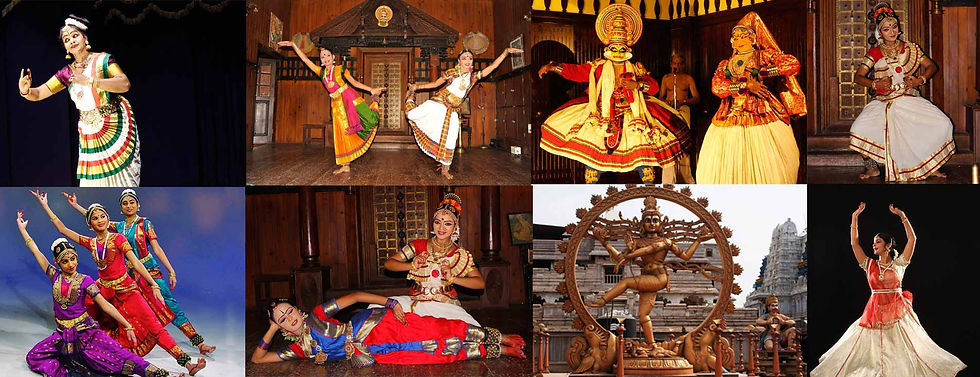
Bharatanatyam on Instagram, Tabla on SoundCloud
Something unusual is happening in India's classical arts. A generation of young people who grew up watching YouTube and consuming global pop culture is returning — with genuine enthusiasm, not nostalgic obligation — to Bharatanatyam, Carnatic music, Kathak, Hindustani classical, Odissi, and the dozens of other classical and folk traditions that form India's arts heritage. And they are using the same platforms and tools of global digital culture to do it.
This revival is worth understanding, both as a cultural phenomenon and as a career and creative pathway that more young Indians than expected are finding genuinely meaningful.
Why Classical Arts Were Declining (And Why That's Changing)
The trajectory for India's classical arts through most of the post-independence period was consistent: declining audience for live performances, shrinking institutional support, the social prestige of practitioners falling relative to the prestige of professional careers in medicine, engineering, and management. Classical arts were something your grandmother appreciated, something you were made to learn as a child without quite understanding why, and something you stopped doing when board exams arrived.
The reasons for this decline were largely economic and infrastructural. Classical arts are time-intensive to learn — genuine proficiency in any classical form requires years of sustained practice. The economic returns for most practitioners were unreliable. The audience was aging. Young people with options were choosing other things.
What is changing this, ironically, is the same digital environment that was supposed to accelerate the decline of traditional culture. Social media has created new distribution for classical arts content, new audiences who encounter it without the barrier of finding a live performance, and new communities of practitioners who find each other and build motivation through shared digital spaces.
How Social Media Changed the Equation
A Bharatanatyam dancer posting a one-minute performance video on Instagram Reels reaches an audience that no classical auditorium could aggregate. The algorithmic distribution of dance content does not distinguish between Western contemporary dance and Indian classical — a technically impressive, visually engaging performance reaches people who had no prior exposure to Bharatanatyam and discover they find it beautiful.
The comment sections on classical music and dance content on Instagram and YouTube are full of young people discovering these forms for the first time and responding with genuine enthusiasm rather than the polite appreciation that traditional classical concerts sometimes produce. The digital audience is new, younger, and less gatekept than the live classical audience.
This has created a feedback loop: young practitioners who might have felt isolated in their interest discover they have an audience, which motivates continued practice and creation, which builds more audience.
The Artists Leading the Revival
T.M. Krishna, the Carnatic vocalist, has deliberately and publicly expanded the classical music audience by performing in non-traditional spaces — factories, public parks, fishing communities — and by connecting Carnatic music to contemporary social justice concerns. His approach has been controversial within the classical establishment and successful in reaching audiences that classical music had lost. [Likely]
Vidya Vox, the Indian-American musician, built a YouTube audience of millions by creating fusion covers that blend Carnatic music with Western pop. Whether or not classical purists approve, she introduced millions of young people to Carnatic melodic structures they had no other entry point to.
Raghu Dixit, whose work draws heavily on Kannada folk traditions, and Swarathma, who fuse Hindustani classical with rock, represent a strand of the revival that is specifically concerned with making classical and folk forms accessible without compromising their essential character.
Classical Arts as Career
The career path for classical arts practitioners is not stable by conventional measures — but it is less unstable than it has been in decades. The combination of teaching revenue (physical and online), performance revenue, social media monetisation, and brand collaborations is producing sustainable incomes for a larger number of classical practitioners than the previous generation could access.
Online teaching has particularly changed the economics. A Bharatanatyam teacher in Chennai who previously could only teach students within driving distance of their studio now teaches students in Singapore, London, and New York, at rates that reflect the international market rather than the local one. This has materially improved the economic position of skilled classical teachers who are willing to build an online presence.
The Meaning Question
Beyond the career and the social media metrics, there is something harder to quantify happening. Young Indians who are returning to classical arts frequently describe the experience in terms of identity and depth — a sense of connection to something larger than themselves, a practice that requires genuine commitment and returns genuine mastery, and a form of cultural inheritance that they are choosing rather than having imposed.
In a cultural moment defined by speed, surface, and constant novelty, the slowness of classical arts — the years required to develop, the precision demanded, the tradition being carried — offers something that many young people find they were missing without being able to name it.
The revival is not sentimental. It is, in its own way, forward-looking — a generation discovering that some of what is valuable from the past does not need to be left there.


Comments