The Global Student Protest Wave: What Young People Are Fighting For

Across the world, student movements are reshaping political conversations around war, climate change, economic inequality, campus rights, and social justice. While these protests rarely transform national policy directly, they influence public discourse, pressure institutions, and reflect a generation increasingly unwilling to remain politically passive.
Campus Movements Rewriting the Political Conversation
University campuses have been among the most consistent sites of political mobilisation throughout modern history. The past five years have produced a new wave of student activism globally — distinctive in its geographic breadth, its social media amplification, and the specific concerns driving it. Understanding this wave requires moving beyond simple characterisations in either direction: these are not simply noble democrats fighting oppression, nor are they simply naive radicals beyond reason. They are complex, diverse, and worth taking seriously.
The Gaza Solidarity Encampments
The most globally visible student mobilisation of 2024 was the pro-Palestinian encampment movement that spread from Columbia University to dozens of campuses across the US, UK, Australia, Canada, France, and beyond, following the Israeli military campaign in Gaza after October 7, 2023.
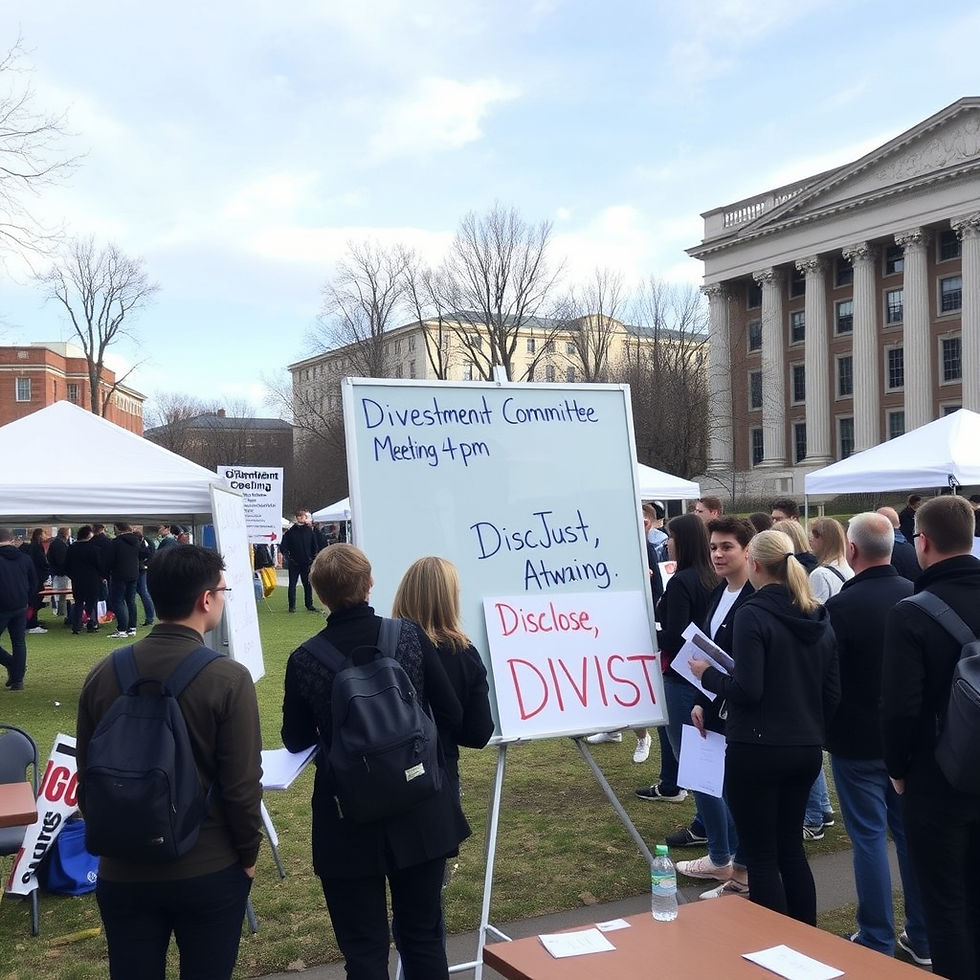
The movement demanded that universities divest from companies with Israeli military contracts or operations and sever institutional relationships with Israeli academic institutions. Campus administrations responded with varying degrees of negotiation, tolerance, and — in the US particularly — police clearance of encampments that produced significant controversy and legal challenges.
The encampments were not politically monolithic: participants ranged from Jewish activists with strong anti-occupation positions to Muslim students motivated by solidarity with Palestinian civilians to secular leftists motivated by anti-war and anti-corporate positions. The movement's internal diversity was frequently misrepresented in both sympathetic and hostile coverage.
The policy outcomes have been mixed and largely university-specific: some institutions committed to disclosure reviews of investments; few made immediate divestment commitments; several US state legislatures responded with legislation restricting campus protest. [Likely]
Climate and Fossil Fuel Divestment
Campus climate activism predates the Gaza encampments by a decade and continues alongside it. Student fossil fuel divestment campaigns at Oxford, Cambridge, Harvard, and institutions across India have produced commitments from some institutions and resistance from others. The movement has shifted from demanding immediate divestment (a blunt demand that most investment committees resisted) to demanding fossil fuel exclusion from endowment investment policies and transparency about existing holdings — a more technically legible demand that has produced more institutional engagement.
Economic Justice and Student Debt
In the US, the student debt movement — demanding cancellation of federal student loan balances — produced significant political pressure that contributed to the Biden administration's partial loan forgiveness actions, though these have faced legal challenges. The underlying dynamic: a generation that borrowed heavily on the assumption of a college wage premium and entered labour markets where that premium was eroding relative to debt levels.
In the UK, rent strikes at several universities and campaigns against rising tuition fees have produced specific institutional responses — rent freezes, emergency funds — at individual universities without producing system-level policy change.
India: Specific and Structural
Student politics in India operates in a context where national political parties are deeply embedded in campus organisations — NSUI (Congress), ABVP (BJP), SFI (Left), and others — which means campus political activity is simultaneously student-driven and party-mediated in ways that differ from independent campus movements elsewhere.
Student-specific campaigns in India have addressed: NEET examination irregularities and equity (the 2024 examination controversy generated significant student protest), reservation policies and their implementation, campus sexual harassment through the ICC system, and student mental health and institutional support.
The Jawaharlal Nehru University (JNU) student union has historically been a significant site of politically independent student activism, facing political pressure that has intensified in the current political climate. [Likely]
What Student Movements Can and Cannot Do
The honest assessment of what campus activism achieves: it changes the political salience of issues among educated young people, sometimes forces institutional responses (specific policy changes at specific institutions), and builds the organisational capacity of the people who participate. It rarely directly changes national policy, because universities — however symbolically important — are not the locus of most political power.
The value of student political engagement is partly the policies it advocates for and partly the civic development of the people doing the advocating. The skills of collective organisation, persuasive communication, and sustained engagement with institutional power are worth building regardless of specific policy outcomes.


Comments