Solo Travel as an Indian Woman: Practical Safety Guide for 2025

Solo travel as an Indian woman in 2025 requires preparation, situational awareness, and smart decision-making — not constant fear. While safety risks vary across destinations and situations, informed choices about transport, accommodation, timing, and communication can make solo travel both manageable and deeply rewarding.

Real Advice, Not Fear-Mongering
The conversation around solo travel for Indian women tends to exist in two unhelpful extremes. The cautionary extreme — India is unsafe, do not go alone, you are taking unnecessary risks — is driven by genuine concern but produces paralysis. The uncritical positive extreme — solo travel is always empowering, everywhere is safe, just go — ignores real risks in ways that are irresponsible.
The practical truth is between these positions: India has significant safety challenges for women travelling alone in certain contexts, and it also has vast territories where solo travel is entirely manageable with adequate preparation and situational awareness. The goal of this article is the information needed to travel specifically rather than react generally.
The Honest Safety Landscape
Safety for solo women travellers in India varies enormously by destination, time of day, type of accommodation, and mode of transport. The risk profile of hiking a trail in Meghalaya with other trekkers is not the same as arriving alone at a bus stand in an unfamiliar North Indian city at midnight. Treating these situations identically — either both safe or both unsafe — misses the specific information needed to travel well.
Statistically, India's record on sexual violence is serious and is reasonably reflected in international travel advisories. [Likely] Simultaneously, millions of Indian and international women travel solo in India every year without incident. The gap between the statistical concern and the individual experience is bridged by the specific choices made about destinations, accommodation, transport, and behaviour.
Destinations Where Solo Women Travel Well
The Northeast states — Meghalaya, Mizoram, Nagaland, Sikkim — are consistently rated among the safest destinations in India for solo women. The culture in these states is different from the Hindi-belt North in ways that are relevant to this specific question: harassment of women in public spaces is significantly less common, public intoxication (a risk factor in many situations) is lower in Mizoram's dry-state culture, and the presence of other trekkers and travellers creates social density in popular areas.
Rajasthan's major tourist circuit — Jaipur, Jodhpur, Udaipur, Jaisalmer — is heavily travelled and has established safety infrastructure for solo tourists. Harassment exists but is primarily verbal and commercial (persistent touts and scammers) rather than physically threatening, and the tourist infrastructure means there are always other people around.
Goa is well-travelled but requires more specific awareness than its relaxed reputation suggests — beach areas at night, particularly in areas with significant nightlife, carry different risk profiles than daytime travel.
Kerala, with its high literacy rates, strong women's employment participation, and established tourism infrastructure, is consistently comfortable for solo women travellers.
Transport Safety
Trains are safer than buses for solo women at night. The women's quota coach (available in most long-distance trains) is specifically designated for women and families and staffed by RPF (Railway Protection Force) personnel. Book the women's quota when available — it is not always visible on the IRCTC booking interface but is accessible by specifically filtering for it.
For local transport: app-based cabs (Ola, Uber) are safer than autorickshaws and local taxis for solo travel, because the driver's identity is registered and the journey is tracked. Share the trip details feature with someone you trust. Pre-book where possible rather than negotiating street-side.
Night buses carry higher risk than daytime travel generally, and sleeper buses (where you are in a small enclosed compartment) require the same vigilance as any shared accommodation situation.
Accommodation
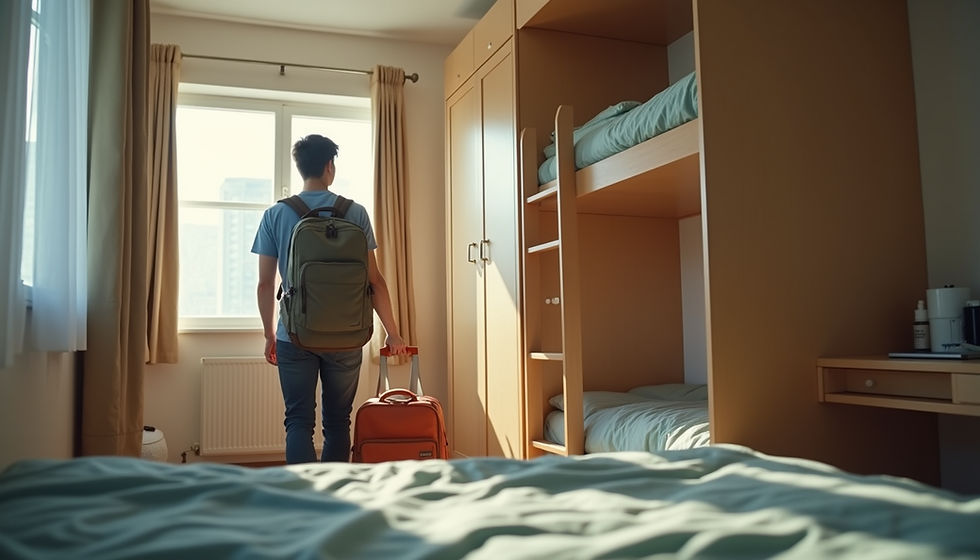
Hostels with female dormitories — the Zostel network, Moustache Hostels, and others that specifically designate women-only dorm options — offer both safety and social connection. The social environment of a good hostel means you are rarely isolated, and other travellers are both companions and safety witnesses.
For solo women, solo room accommodation (a private room rather than dormitory) sometimes increases cost beyond the ₹1,000 daily budget but provides meaningfully better security in situations where the dormitory feels uncertain.
Avoid accommodation where you cannot view the room and meet the staff before committing. Platforms like Booking.com with verified reviews from other women travellers are more reliable than negotiating accommodation on arrival in an unfamiliar place.
Digital Safety Tools
Offline maps downloaded in advance (Google Maps, Maps.me) mean you can navigate without requiring mobile data in areas with poor connectivity — and without appearing to be lost, which draws unwanted attention.
Share your itinerary and planned accommodation details with at least one person who knows to check in with you. This does not require surveillance — a daily text confirming arrival is enough.
The Women's Helpline (1091) and Police (100) are the emergency contacts to have saved. In major tourist areas, tourist police helplines operate and are more responsive to traveller-specific situations.
The Balance
None of this is meant to suggest that solo travel for Indian women is primarily a safety management exercise. The overwhelming majority of days on the road are unremarkable in terms of safety — they are full of logistics, food, people, and landscape. The preparation matters precisely so that it does not need to occupy your attention constantly.
Travel with awareness, not anxiety. Know the specific situations that require more care, and apply that care specifically rather than uniformly. The result is travel that is both safer and more free.


Comments