LinkedIn Is Your Resume — Here's How Indian Youth Are Getting It Wrong

For many young professionals, LinkedIn is no longer just a networking platform — it is a public portfolio, first impression, and recruiter search tool combined. Generic profiles, vague descriptions, and inactive accounts quietly reduce opportunities, while specific, outcome-focused, and consistently updated profiles attract attention and credibility.
The Profile Mistakes Costing You Opportunities
LinkedIn has 130 million users in India, making it the second-largest LinkedIn market in the world. Of those 130 million profiles, the vast majority are doing the person attached to them almost no good. They are incomplete, generic, or actively counterproductive — and their owners often have no idea.
Here is a direct assessment of what Indian students and early professionals are getting wrong, and how to fix it.
Mistake 1: The Headline Is a Job Title, Not a Value Statement
The most commonly wasted field on a LinkedIn profile is the headline. The default behaviour — LinkedIn automatically populates it with your current job title and company — is also the worst behaviour. "Student at XYZ College" or "Marketing Intern at ABC Company" tells a viewer nothing about why they should click further.
Your headline should communicate what you do or what you are building toward, who you do it for, and ideally a specific result or differentiator. "Content strategist helping D2C brands grow organic traffic | 3 brands, 2x average engagement" is a headline. "Marketing Intern" is a label.
For students with no work experience, the headline should reflect your area of focus and your trajectory: "Data science student | Python, SQL, ML projects | Seeking analytics roles in fintech" is far stronger than "Student at XYZ University."
Mistake 2: The About Section Is a Summary of Nothing
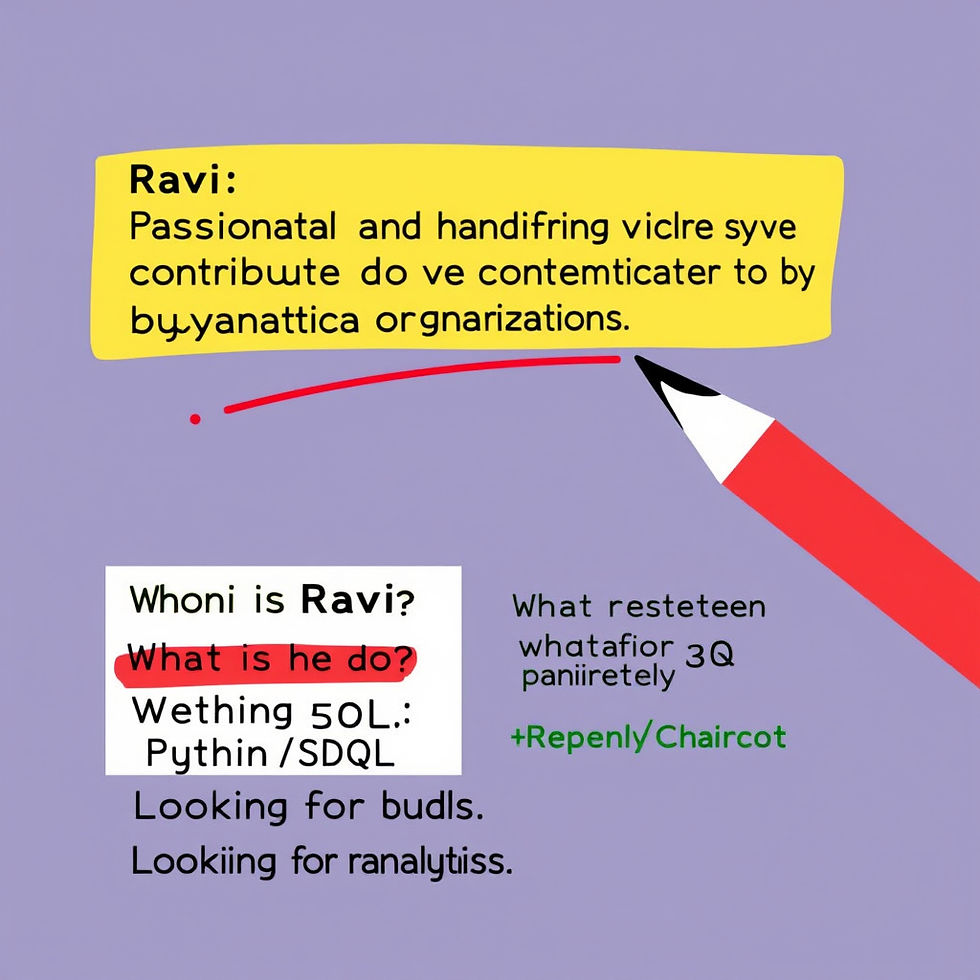
The About section is 2,600 characters of prime real estate that most Indian profiles use to write a formal third-person biography. "Ravi is a passionate and hardworking individual who is eager to contribute to a dynamic organisation." This sentence contains no information. Recruiters read it and move on.
Write your About section in first person. Lead with something specific about your work or interest. State what you are currently doing, what you are good at, and what you are looking for. Include specific projects, tools, or domains. End with a clear invitation — "open to full-time roles in product management" or "let's connect if you work in climate tech."
The About section should sound like you wrote it, not like a HR form.
Mistake 3: Experience Entries List Responsibilities, Not Outcomes
"Responsible for managing social media accounts." This is a responsibility. Nobody cares about your responsibilities. They care about what happened because of your work.
Rewrite every experience entry around outcomes: "Managed three brand Instagram accounts; grew combined following by 12,000 in six months with an average engagement rate of 4.2%, above the industry benchmark of 1.9%." Now there is something worth reading.
If you cannot remember the specific numbers, estimate honestly and be transparent about it. "Approximately 15% increase in organic reach" is better than a vague claim and far better than no number at all. Numbers signal that you think about your work in terms of impact, not just activity.
Mistake 4: Skills Section Is Cluttered With Low-Signal Entries
Microsoft Word. Teamwork. Communication. Positive Attitude. These skills occupy space on thousands of Indian profiles and communicate nothing to any recruiter. Everyone claims them.
Curate your skills section ruthlessly. Keep the skills that are specific, verifiable, and relevant to the roles you want. Tools (Figma, Tableau, HubSpot), languages (Python, SQL), methodologies (Agile, user research, financial modelling), and domain knowledge (SEBI regulations, supply chain logistics) are worth listing. Soft skills claimed without evidence are noise.
Also: get endorsements for skills that matter. Three meaningful endorsements from people who have actually seen your work outweigh fifty endorsements from classmates who clicked a button. LinkedIn's algorithm also weights skills with endorsements more heavily in recruiter searches.
Mistake 5: No Recommendations
A LinkedIn profile with zero recommendations in the age of 30 LPA salary expectations is a missed signal. Recommendations from managers, internship supervisors, professors who know your work, or clients you have served are third-party validation that your self-reported achievements are real.
Asking for a recommendation is not awkward — it is a normal professional practice. Ask specifically: "Would you be willing to write a short recommendation about the project we worked on in Q3?" A specific ask produces a useful recommendation. A vague ask produces a generic one.
Mistake 6: The Profile Photo Is Wrong
In India, profile photos on LinkedIn frequently fall into two categories: casual selfies taken at social events, and overly formal passport-style photos that look like visa applications. Neither is ideal.
The right photo for LinkedIn is a clear, well-lit headshot where you are looking at the camera, dressed appropriately for the industry you want to work in, and visibly approachable. You do not need a professional photographer. Natural light from a window and a clean background are sufficient. The photo signals that you take the platform seriously.
Mistake 7: No Activity
A profile that was last updated six months ago and has posted nothing in that time tells recruiters and connections that you are not actively engaged in your professional community. LinkedIn's algorithm rewards activity with visibility. Profiles that post, comment, and engage appear more frequently in search results.
You do not need to post every day. Two or three thoughtful posts per month — sharing something you learned, your perspective on an industry development, or a concise summary of a project — keeps your profile visible and demonstrates that you have active professional interests.
Commenting on posts by people in industries you want to work in is often more effective than posting. A consistently insightful commenter gets noticed by the original poster's entire audience.
Mistake 8: Not Customising Connection Requests
The default LinkedIn connection request — no message, no context — is a missed opportunity. When you connect with someone you do not know, a one or two sentence note explaining why you want to connect converts significantly better and starts the relationship on a better footing.
"I came across your article on supply chain optimisation and found your perspective on vendor consolidation really useful. I'm an operations student at [university] interested in this space — would love to connect." This takes thirty seconds to write and dramatically changes the probability of a response.
The Profile That Gets Results
The LinkedIn profiles that generate inbound messages from recruiters, interview invites, and collaboration opportunities share a few characteristics: they are specific rather than generic, outcomes-oriented rather than responsibility-listed, regularly updated, and visually professional. They read like the profile of someone who is actively doing something, not someone passively waiting for something to happen.
Your LinkedIn profile is working for you twenty-four hours a day, whether you are logged in or not. The question is whether it is working in your favour.


Comments