How to Make Real Friends as an Adult (It's Harder Than It Should Be)Beyond the College WhatsApp Group

At 22, friendship feels abundant and automatic. You are surrounded by people your age in a shared environment — college, hostel, early workplace — and proximity does the work of friend-making almost by default. You do not choose most of your college friends as much as you become friends through shared experience, shared meals, and shared geography.
At 27, the same person finds themselves in a city, possibly a new one, possibly working remotely, with a demanding job and limited unstructured time, and the realisation that they have not made a new genuine friend in two or three years. The college WhatsApp group is still active, but those people are elsewhere, busy with their own lives, and the relationship is maintained through memes and occasional nostalgia rather than through the regular shared experience that produced it.
This is not unusual. It is the default adult friendship trajectory for most people, and recognising it is the first step toward doing something different.
Why Adult Friendship Is Harder
The sociological research on adult friendship formation identifies three conditions that make friendship formation most likely: proximity (repeated, unplanned interaction), unplanned interaction (not scheduled, not transactional), and a setting that encourages people to drop their guard. [Likely — this framework comes from sociologist Rebecca Adams' research]
College provides all three automatically. Adult life provides none of them automatically. Your colleagues are proximate but the workplace context is professional and guarded. Your neighbours are proximate but Indian apartment culture rarely produces the casual dropping-in that builds friendship. Scheduled social activities are, by definition, planned — they lack the serendipity that produces the best friendship moments.
The result is that making friends as an adult requires deliberate effort to recreate conditions that college produced accidentally — and most people do not know this, so they wait for the conditions to appear rather than creating them.
What Actually Works
Repeated exposure to the same people in non-professional contexts is the foundation. This means finding activities that you will do consistently, in the same group, over multiple months — not one-off events.
Sport and fitness classes: a regular volleyball team, a running club, a yoga class you attend at the same time each week, a cycling group. The repeated co-presence, shared physical exertion, and natural conversation topics produce exactly the conditions for friendship formation. The key is consistency — going once builds nothing, going every week for two months builds something.
Interest communities: book clubs, coding groups, chess clubs, craft circles, language exchange groups. These combine the repeated exposure of regular meetings with the shared interest that provides natural conversation and connection. India's metro cities have far more active interest communities than most people realise — Meetup.com, Facebook Groups, and Instagram communities list dozens per city.
Volunteering: working alongside people toward a shared purpose creates the kind of side-by-side experience that builds connection without the awkwardness of face-to-face conversations designed to produce friendship. Many long-term volunteer friendships begin from shared focus on a task rather than from intentional socialising.
The Follow-Up Problem
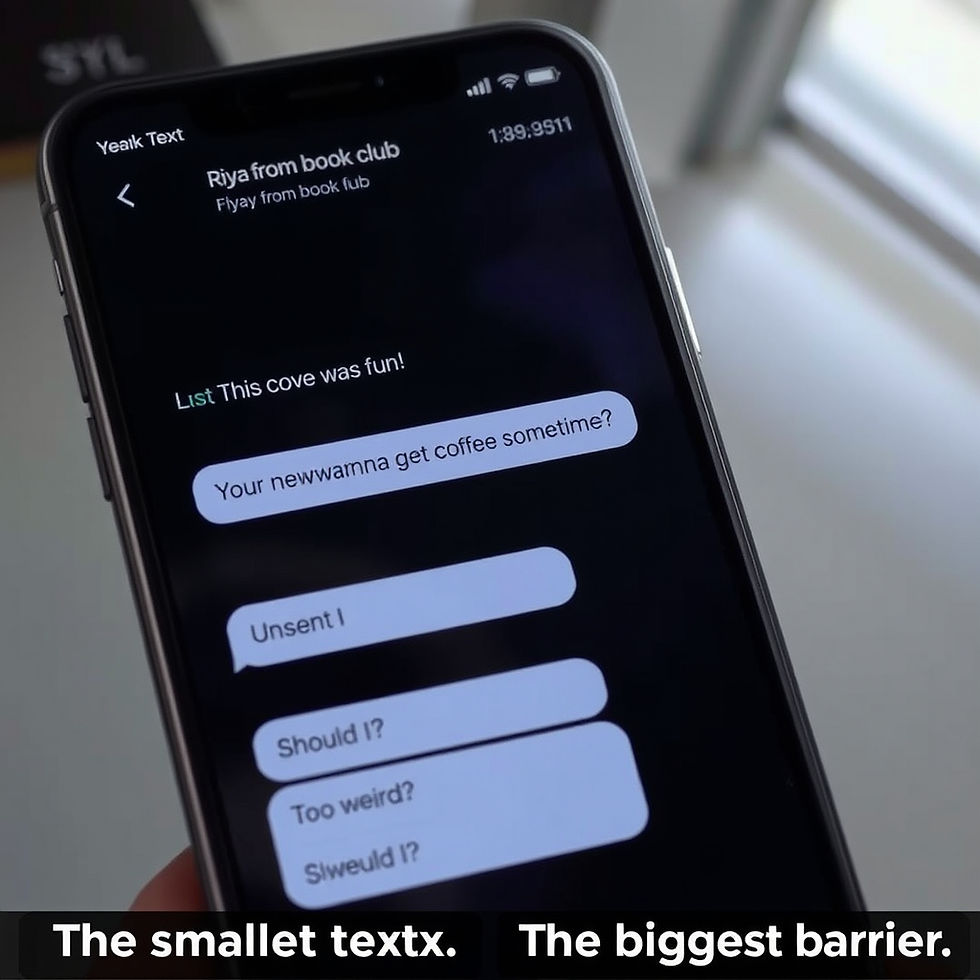
The most common friendship-formation failure is meeting interesting people and not following up. A good conversation at an event produces a LinkedIn connection or an Instagram follow and then nothing, because neither person initiates the step from pleasant encounter to actual friend.
The initiative required to convert a positive encounter into a developing friendship is small but feels large: sending a message that says "I enjoyed talking to you at X — would you want to get coffee sometime?" Most people who receive this message are happy, even grateful. Most people who could send it do not, out of social anxiety about seeming too forward.
Send the message. The worst realistic outcome is a polite non-response. The best outcome is the beginning of a friendship that will matter to you for years.
The Long Timeline
Research on adult friendship formation suggests that it takes approximately 50 hours of time together to move from acquaintance to casual friend, and 200 hours to move to close friend. [Likely — these figures come from Jeffrey Hall's research at University of Kansas] These are not hours of intentional friendship-building — they are hours of shared time, which accumulates from repeated meetings over months.
This timeline is slower than college friendship formation because the hours accumulate more slowly in adult life — a weekly activity adds up, but more slowly than 24-hour proximity in a hostel.
The implication: start earlier than you think you need to, and be patient with a process that produces results more slowly than it feels it should.


Comments